An ice shelf gone in a month: Larsen B, Antarctica
Larsen B Ice Shelf, 31 January and 13 April 2002
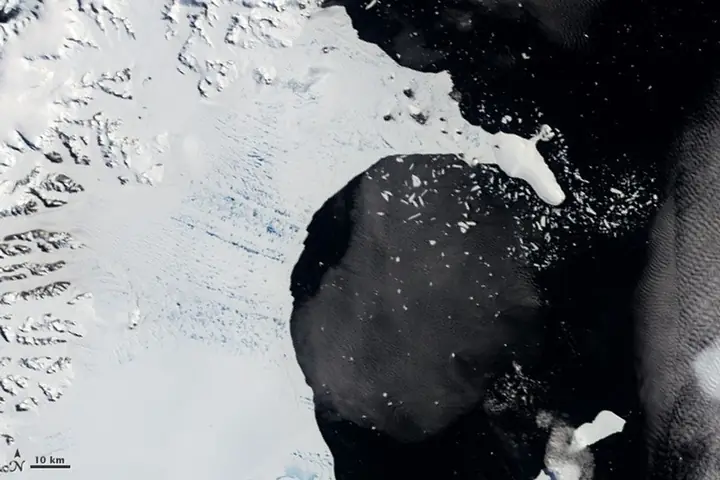 31 Jan 2002
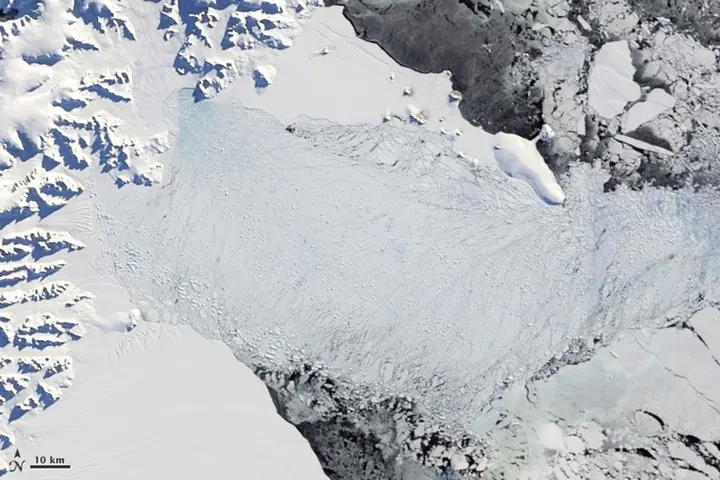 13 Apr 2002
In the southern summer of 2002, about 3,250 km² of the Larsen B Ice Shelf — larger than Luxembourg — broke apart in just over a month. NASA attributes it to a series of warm summers on the Antarctic Peninsula, ending in an exceptionally warm one: meltwater ponds on the surface deepened cracks until the shelf split. Afterwards, the glaciers that the shelf had held back sped up by about 300% on average, sending more ice into the sea.
Glaciers disappearing: Glacier National Park, USA
Glacier National Park, Montana, 17 August 1984 and 23 August 2015
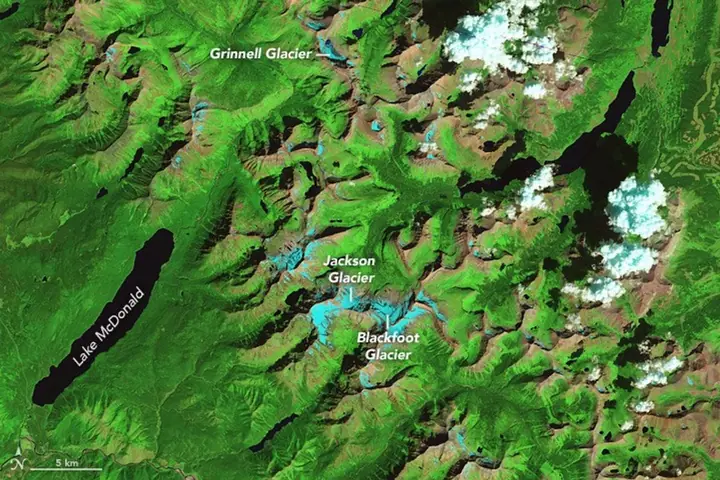 1984
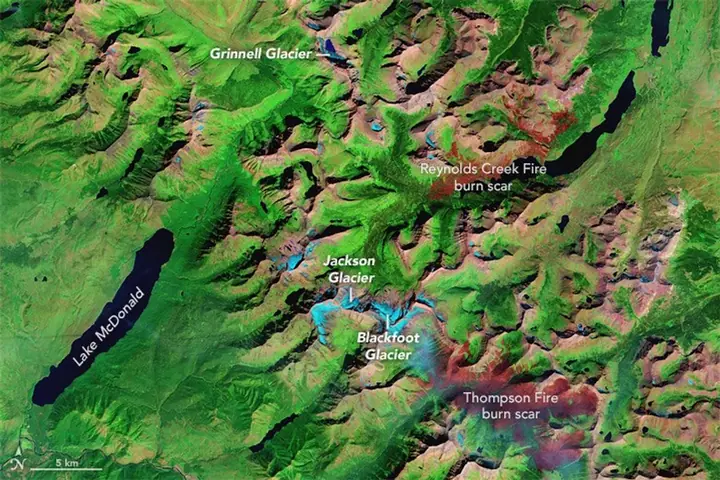 2015
About 150 glaciers were documented here in 1850. In 1968, surveys counted 83 bodies of ice and snow larger than 0.1 km²; NASA now counts 25. Warm summers and changes in snowfall drive the loss, and NASA attributes most of it to decades of warming rather than year-to-year weather. The red patches in 2015 are scars from wildfires.
A glacier in retreat: Columbia Glacier, Alaska
Columbia Glacier, Alaska, 28 July 1986 and 5 August 2024
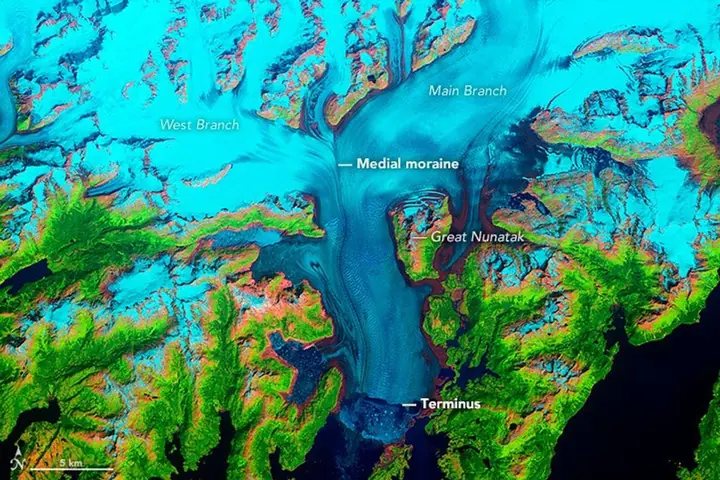 1986
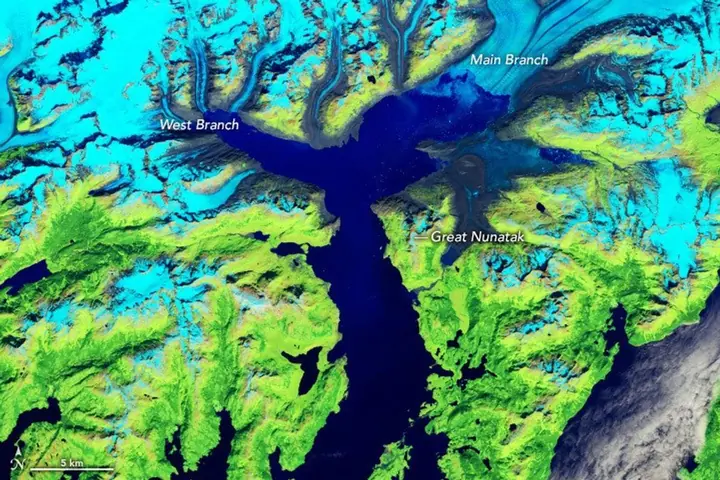 2024
Since the 1980s the main branch of Columbia Glacier has retreated more than 20 km and lost more than half of its thickness and volume. This one is not simply a thermometer: NASA notes that climate change may have given the glacier an initial push, but once it lost its footing on the moraine at its front, its own mechanics — faster flow and calving — drove most of the retreat.
A reservoir draining: Lake Powell, USA
Lake Powell near Hite, Utah, 25 March 1999 and 30 April 2021
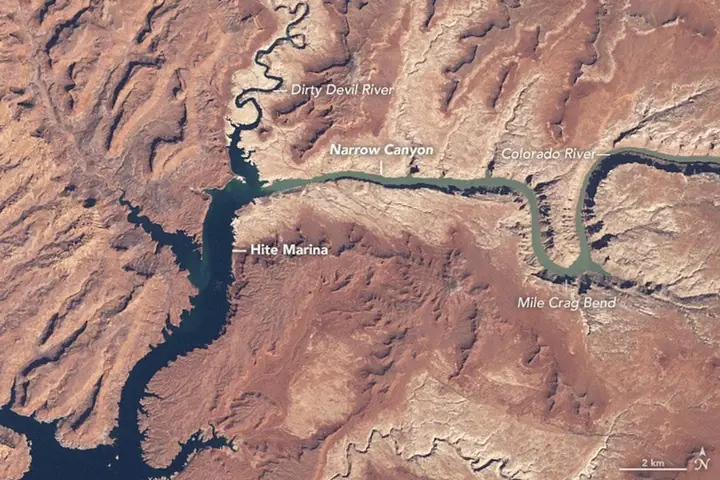 1999
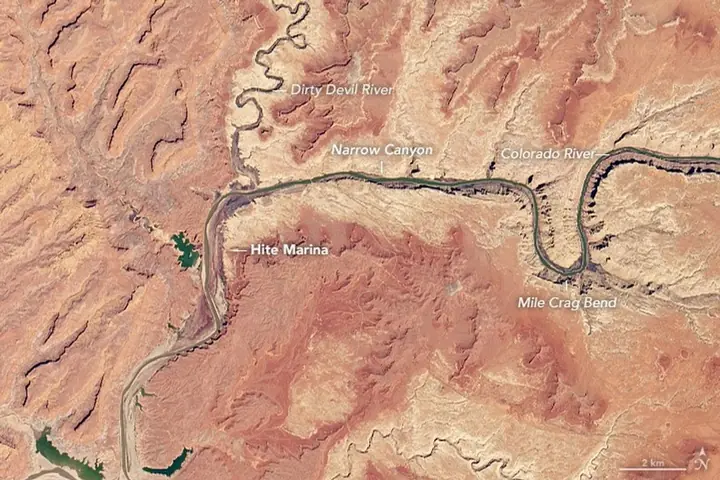 2021
In 1999 Lake Powell was nearly full. By 2021 the arm near Hite Marina had shrunk to a river channel. NASA attributes the decline to prolonged drought in the US Southwest combined with water withdrawals that many consider unsustainable. NASA also notes that the droughts so far are not unusual compared with tree-ring records of past centuries — but that global warming is expected to make droughts more severe.
What it means
Ice responds to warming in plain sight: shelves that took thousands of years to form can break up in weeks, and mountain glaciers that were mapped in the 1800s are now down to a fraction. Other changes, like a falling reservoir, are climate stacked on top of human choices — which also means they can be managed.
For what lies ahead, see where dangerous heat spreads, how fast the sea is rising and Arctic sea ice today.